Hey there! I’m a supplier of Continuously Transposed Conductors (CTCs). You know, CTCs are super important in the electrical industry, especially in transformers. Today, I wanna chat about the dielectric properties of the insulation on these conductors. Continuously Transposed Conductors
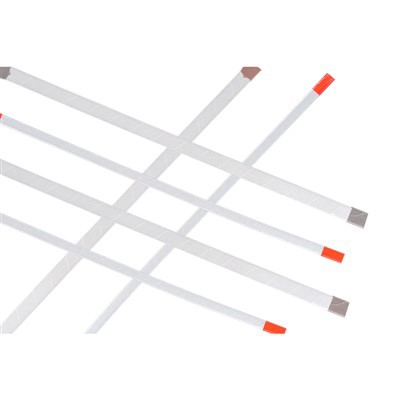
Okay, first things first. What’s dielectric property? Well, dielectric refers to a material that can store electrical energy when placed in an electric field. In the case of CTCs, the insulation material around the conductor needs to have good dielectric properties. Why? Because it has to prevent electrical leakage and ensure the efficient and safe operation of the electrical equipment.
Let’s dig a bit deeper into these dielectric properties. One of the most crucial properties is dielectric constant, also known as relative permittivity. It’s a measure of how well a material can store electrical energy compared to a vacuum. For the insulation on CTCs, a proper dielectric constant is essential. If it’s too high, it might cause increased capacitance and power losses in the electrical system. On the other hand, if it’s too low, the insulation might not be able to effectively store the electrical energy, which could lead to breakdowns.
Another key property is dielectric strength. This is the maximum electric field that the insulation material can withstand without breaking down. In practical terms, it determines the voltage level at which the insulation will start to conduct electricity, which is a very dangerous situation. For CTCs used in high – voltage applications, like power transformers, high dielectric strength is a must. You don’t want the insulation to break down when there are high voltages running through the conductors, as it could lead to short – circuits, equipment damage, or even safety hazards.
Dielectric loss is also an important aspect. When an alternating electric field is applied to the insulation material, some of the electrical energy is converted into heat due to the internal friction of the molecules in the material. This is called dielectric loss. A low dielectric loss is desirable for the insulation on CTCs. If the dielectric loss is high, it means more energy is being wasted as heat, which not only reduces the efficiency of the electrical system but can also cause the insulation material to heat up and degrade over time.
Now, the choice of insulation material for CTCs has a big impact on these dielectric properties. We usually use materials like polyester film, polyamide film, or paper – based materials. Polyester film has good dielectric strength and a relatively low dielectric constant. It’s also quite durable and resistant to mechanical stress, which is great for CTCs that might go through some bending and twisting during the manufacturing and installation processes.
Polyamide film, on the other hand, offers excellent thermal stability in addition to good dielectric properties. It can withstand high temperatures without significant degradation of its dielectric performance. This makes it a good choice for CTCs used in high – temperature environments, such as in some industrial transformers.
Paper – based insulation materials have been used for a long time in the electrical industry. They are relatively inexpensive and have decent dielectric properties. However, they are more sensitive to moisture. Moisture can significantly reduce the dielectric strength and increase the dielectric loss of paper – based insulation. So, when using paper – based insulation for CTCs, proper moisture – proofing measures need to be taken.
We, as CTC suppliers, put a lot of effort into ensuring that the insulation on our conductors has the best possible dielectric properties. We conduct rigorous testing during the manufacturing process. For example, we measure the dielectric constant and dielectric loss using specialized equipment. We also perform breakdown voltage tests to check the dielectric strength of the insulation.
One of the challenges we face is maintaining the consistency of these dielectric properties across different batches of CTCs. There can be slight variations in the raw materials, and the manufacturing process needs to be carefully controlled to minimize these variations. We use advanced manufacturing techniques and quality control systems to achieve this.
Another aspect is dealing with the changing requirements of the electrical industry. As the demand for high – voltage, high – efficiency electrical equipment increases, the requirements for the dielectric properties of the insulation on CTCs are also getting more stringent. For example, in modern power grids, there is a trend towards using higher voltages to transmit electricity more efficiently. This means that the CTCs used in the transformers of these grids need to have even higher dielectric strength and lower dielectric loss.
We are constantly researching and developing new insulation materials and manufacturing processes to meet these challenges. We work closely with material suppliers to source the best raw materials and collaborate with research institutions to explore new technologies.
In conclusion, the dielectric properties of the insulation on Continuously Transposed Conductors play a vital role in the performance and safety of electrical equipment. From storing electrical energy efficiently to withstanding high voltages, these properties are critical. As a CTC supplier, we are committed to providing high – quality conductors with excellent dielectric performance.

If you’re in the market for Continuously Transposed Conductors, whether for a small – scale electrical project or a large – scale industrial application, we’d love to talk to you. We can offer you detailed information about the dielectric properties of our products and how they can meet your specific needs. Don’t hesitate to reach out for a purchase negotiation. We’re here to help you find the best CTC solutions for your electrical systems.
Flat Wire Winding References:
- "Electrical Insulation Materials and Systems" – A comprehensive book on electrical insulation and its properties.
- Industry reports on transformer design and manufacturing, which often include details about CTC insulation.
Tianjin Jingwei Power Technology Co., Ltd.
As one of the most professional continuously transposed conductors manufacturers and suppliers in China, we’re featured by quality products and good service. Please rest assured to buy durable continuously transposed conductors made in China here from our factory. Contact us for more details.
Address: No.1 Chuangxin Rd. Xiaozhan Industrial Park, Jinnan District, Tianjin, China
E-mail: info@jwdc.cn
WebSite: https://www.jw-dcs.com/
