Yo, what’s up! I’m a supplier in the game of 4G and Analog Radio tech. Lately, I’ve been getting a lot of questions from customers about privacy concerns between 4G and Analog Radio. So, I thought I’d break it down here and share my two cents. 4g and Analog Radio
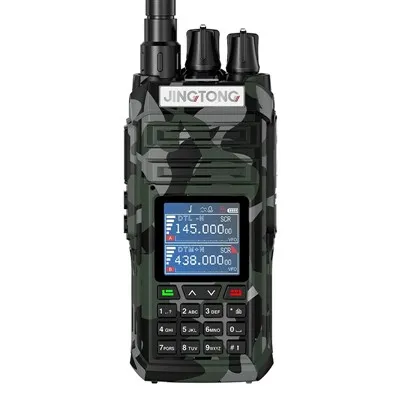
First off, let’s talk a bit about Analog Radio. It’s been around for ages, way before 4G. Back in the day, analog radio was king. It uses continuous signals to transmit audio, which is a pretty straightforward tech. You tune your radio to a specific frequency, and boom, you’re listening to your favorite tunes or news.
Now, the thing about analog radio is that it’s pretty open. The signals are broadcast out into the airwaves for anyone with the right receiver to pick up. That means if someone wants to listen in on an analog radio transmission, they can. It’s not encrypted, so all the info is just floating out there, plain and simple. That could be a bit of an issue if you’re running a business or organization that wants to keep certain communications private. For example, if a company is using analog radio for internal comms, competitors or other unauthorized folks could potentially eavesdrop.
On the other hand, we’ve got 4G. 4G is a whole new ballgame. It’s a digital technology that uses packet – switched networks to send data. This means that data is broken up into small packets, sent across the network, and then reassembled at the other end.
One of the big perks of 4G when it comes to privacy is encryption. 4G networks use advanced encryption algorithms to protect the data that’s being transmitted. So, if you’re sending a text, making a call, or downloading a file over 4G, your data is scrambled and can only be unscrambled by the intended recipient with the right keys. This makes it a lot harder for someone to intercept and understand your data compared to analog radio.
But that doesn’t mean 4G is completely bulletproof when it comes to privacy. There are still some potential concerns. For starters, there are always hackers out there trying to find ways around encryption. If a hacker manages to find a vulnerability in the 4G encryption system, they could potentially intercept and decrypt the data.
Also, with 4G, your mobile devices are constantly connected to the network, sharing location data and other types of information with service providers. This data collection can be a privacy issue for some folks. Service providers may use this data for targeted advertising or other purposes, and if it falls into the wrong hands, it could be misused.
Another thing to consider is the role of governments and regulatory bodies. In some cases, they may have the ability to access 4G data under certain circumstances, like for law enforcement or national security reasons. While there are supposed to be checks and balances in place, this can still make some people uneasy about the privacy of their 4G communications.
Let’s compare the two technologies in a more practical way. Say you’re a construction company. If you use analog radio for communication on the job site, anyone within range with a radio tuned to the right frequency can listen in on your conversations. This could be a problem if you’re discussing project details, schedules, or any other sensitive info.
On the other hand, if you switch to 4G – enabled devices for communication, your data is encrypted, providing a higher level of privacy. Workers can communicate securely, and the risk of eavesdropping is significantly reduced.
But here’s the deal. Analog radio still has its place. It’s simple, reliable, and doesn’t require a fancy network infrastructure. In some rural areas where 4G coverage is spotty, analog radio can be a lifesaver. It can also be cheaper to implement, especially for small – scale operations.
4G, though, offers a whole bunch of features and capabilities that analog radio just can’t match. Besides better privacy in terms of encryption, it allows for high – speed data transfer, video calls, and internet access. It’s more in line with the modern, connected world we live in.
So, when it comes to privacy, it’s not a clear – cut case of one being better than the other. Both 4G and analog radio have their own pros and cons. It really depends on your specific needs and circumstances.
If you’re a business owner or part of an organization thinking about which technology to go for, you’ve got to weigh the privacy aspects along with other factors like cost, coverage, and functionality.
At the end of the day, my job as a supplier is to help you make the right choice. Whether you’re leaning towards the simplicity of analog radio or the advanced features of 4G, I can provide you with the best products and solutions.

If you’re interested in learning more about our 4G and analog radio offerings, or if you want to have a chat about which technology would be the best fit for your privacy needs and business requirements, drop me a line. I’d be more than happy to have a one – on – one discussion with you and help you navigate through these options.
5 Watt Walkie Talkie References:
- Mobile Communications Fundamentals: 4G and Beyond by Joseph Mitola III
- Radio System Design for Telecommunications by John McWhorter
Jingtong (Quanzhou) Electronics Co., Ltd.
We are one of the most professional 4g and analog radio manufacturers and suppliers in China, specialized in providing high quality customized service. We warmly welcome you to buy durable 4g and analog radio made in China here from our factory. For price consultation, contact us.
Address: No.288, Si Huang Industry Zone, Xia Mei Town, Nan An, Quanzhou, Fujian province, China 362302
E-mail: jtdjj@jtdjj.com
WebSite: https://www.jteradio.com/
