If you’ve ever stood inside one of our battery production lines—watching lithium-ion cells being assembled, tested, and packed with precision—you might not immediately think about how those automated workflows ripple out to boost every part of a client’s business. As a battery production line supplier, I spend most of my days talking to startups scaling their first EV lines, gigafactories expanding to meet grid storage demand, and even industrial firms integrating energy storage systems (ESS) into their operations. The number one question I get isn’t about how our machines work—it’s about whether investing in a full production line is actually worth it. For a long time, I used to lead with specs: cycle rates, throughput speeds, defect rates. Now I lead with the economic benefits, because that’s what moves the needle for anyone weighing six or seven-figure capital expenditures. Let’s break down the tangible, data-backed wins that come from partnering with a full battery production line, not just individual machines. Battery Production Line

First, there’s the massive reduction in per-unit production costs, and no, I’m not talking about the vague “economies of scale” buzzword you see in every industry report. Let’s use a real example from a client I worked with last year: a mid-sized ESS startup that was assembling cells by hand in a rented garage, with 12% defect rates and 80% downtime from switching between borrowed machines. They were paying $185 per kWh to produce each cell in 2022. Six months after installing our fully integrated line—from electrode casting to final module testing—their defect rates dropped to 2.1%, and downtime fell to less than 5%. Their per-unit cost? $112 per kWh. That’s a 39% reduction, and it didn’t happen by accident. Full production lines eliminate the waste that plagues small-scale or partially automated operations: no more over-ordering raw materials because of missed machine calibration, no more rework from misaligned cell components, no more labor costs for manually moving parts between 5 different machines across a factory floor. A 2023 report from the International Energy Agency (IEA) found that fully integrated battery production lines cut variable production costs by an average of 32% compared to lineups of individual, unconnected equipment. For a gigafactory producing 10 GWh of cells annually, that adds up to tens of millions in annual savings. And it scales, too. Our line’s modular design means clients can start small (say, 1 GWh) and add capacity as demand grows, so they don’t waste money on unused equipment while their business is still finding its footing.
Next, there’s the revenue upside from consistency and certification. Batteries are only valuable if they meet strict industry standards—ISO 9001 for quality, UN 38.3 for transport safety, IEC 62619 for stationary storage, and then custom standards for EVs or aerospace. When you use individual machines from different vendors, there’s often a gap in data tracking between each step of production. A cell made on a mixing machine from one brand might have a slight variance in cathode coating, and when it’s moved to a stacking machine from another, that variance leads to a fail in final testing. That means you’re not just wasting material and labor on failed cells—you’re missing out on the premium pricing that comes with certified, reliable products. Take electric vehicle (EV) manufacturers: they won’t source cells that can’t meet their 8-year, 100,000-mile warranty, and they’ll pay a 10-15% premium for cells with a 99% pass rate in final testing, compared to those with a 92% pass rate. One of our automotive clients, a new EV startup based in Europe, told me that before they installed our line, they were selling their cells for $130 per kWh, because their 93% pass rate meant they had to discount to move inventory. After six months, their pass rate hit 98.7%, so they were able to raise their price to $148 per kWh—while still cutting their per-unit costs. That’s a double win: lower production costs and higher top-line revenue, all from integrated quality control built into the line.
Then there’s the energy and sustainability cost savings, which might not show up on a quarterly P&L but add up to millions over the life of the line. Battery production is energy-intensive—making one kWh of lithium-ion cells uses about 50-60 kWh of electricity, per the IEA. When production lines are optimized, that number drops. Our lines use real-time energy monitoring across every stage: the electrode drying oven adjusts its temperature based on the humidity in the room, the welding machines only run at full power when a cell is in place, and the material handling robots use energy-efficient motors that cut idle power use by 40% compared to older industrial robots. For a gigafactory running 24/7, that translates to 15-20% lower annual energy bills than a line of individual machines. There’s also the growing pressure from regulators and customers to reduce carbon emissions from manufacturing. Many EV makers now require their battery suppliers to have a “carbon footprint label” on each cell, and they penalize or exclude suppliers that don’t meet strict emissions targets. A 2024 study from the European Battery Alliance found that integrated production lines with energy optimization cut the carbon footprint of cell production by 28% compared to manual or semi-automated lines. For a client selling 5 GWh of cells annually, that’s a reduction of over 70,000 tons of CO2 per year—enough to qualify for carbon credits in markets like California’s Cap-and-Trade program, adding an extra $2-3 million in annual revenue, not to mention avoiding fines for non-compliance.
Another often-overlooked economic benefit is reduced labor costs and human error. Let’s be honest: assembling batteries is precise work, and even the most skilled workers get tired, make mistakes, or need breaks. Our clients that switch from manual or semi-automated lines see a 60-70% drop in direct labor costs for production. A small line that used to employ 12 workers to run and monitor machines can now run with 3 workers, whose jobs are overseeing the line, troubleshooting minor issues, and doing final quality checks—no more bending over heavy cell trays, no more reworking cells that were damaged by human error. But it’s not just about laying off workers; it’s about reallocating labor to higher-value tasks. Instead of spending their days feeding materials into machines and fixing defects, those workers can be trained to work in R&D, supply chain management, or sales—areas that directly drive revenue growth. One of our clients, a grid storage company in Texas, told me that after installing our line, they were able to shift 8 full-time workers from production to their sales team, which helped them secure three major utility contracts in their first year of operation. That’s a return on investment that’s hard to measure on a spreadsheet, but it’s critical for long-term growth.
Supply chain resilience is another big one, especially in the post-pandemic world where component shortages have delayed production for months. When you work with a full production line supplier like us, you get a single point of contact for all your equipment, not five or six different vendors. That means if a part breaks, you don’t have to wait three weeks for a replacement from a machine manufacturer in China, or negotiate with a distributor in Germany for a part that’s out of stock. We keep a 90-day supply of critical spare parts at our regional service centers in North America, Europe, and Asia, and our technical team can be on-site at a client’s facility within 72 hours of a service request. During the 2022 chip shortage, a client of ours that was using individual machines had to shut down production for 10 weeks because they couldn’t get a specific sensor from their mixing machine vendor. A client with our line? They had a spare sensor on-site, so they only had a 48-hour downtime. For a gigafactory that loses $100,000 a day in production, that’s $9.5 million in saved revenue. There’s also the benefit of optimized material handling. Integrated lines are designed to move raw materials, semi-finished cells, and finished modules through the factory in the most efficient way, reducing the need for extra storage space. That means you don’t have to rent extra warehouse space to store raw materials or finished goods, which cuts another big operational cost.
I know what some of you are thinking: “This sounds great, but a full production line is a huge upfront investment. Is it really worth it?” That’s a fair question, and the short answer is yes—if you look at the full lifecycle of the line. Let’s do a quick ROI calculation for a mid-sized client: a 2 GWh production line costs around $12 million upfront. The annual savings from lower per-unit costs, higher revenue, and lower energy and labor costs add up to about $4.5 million per year. Add in carbon credits and the cost of avoiding downtime, and that number climbs to around $5.2 million per year. That means the line pays for itself in less than 2.5 years, and over the 10-year lifespan of the line, that’s $40-50 million in net profit, not counting revenue growth from scaling production or new contracts. Compare that to buying individual machines, which might cost $8 million upfront, but have higher operating costs, lower quality, and a higher risk of downtime. Most of our clients recoup their investment in 2-3 years, and then see consistent profit growth for the rest of the line’s life.
I’ve been in this industry for 15 years, and I’ve seen hundreds of battery projects fail because they focused on the wrong parts: buying cheap, individual machines to save money, or prioritizing throughput over quality. The best battery production line isn’t the one that makes the most cells per hour—it’s the one that makes the most money for the client, year after year. Whether you’re a startup looking to scale your first line, a gigafactory expanding to meet demand for EVs or grid storage, or an industrial firm looking to integrate ESS into your operations, investing in a full, integrated battery production line isn’t just a capital expenditure—it’s a strategic economic decision that will drive growth for decades.
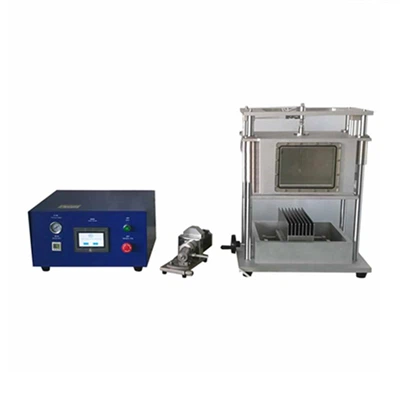
If you’re ready to calculate how a battery production line could benefit your business, we’re here to help. Our team can work with you to analyze your current production costs, quality targets, and growth goals, and build a custom line that fits your needs and budget. Reach out to our team to schedule a consultation and learn more.
Pouch Cell Vacuum Standing Box References
International Energy Agency. (2023). Global Battery Production Cost Report.
European Battery Alliance. (2024). Carbon Footprint of Battery Manufacturing.
U.S. Department of Energy. (2022). Battery Production Line Efficiency and Labor Cost Analysis.
Shenzhen Meirui Zhida Technology Co., Ltd.
Shenzhen Meirui Zhida Technology Co., Ltd. is one of the most professional battery production line manufacturers and suppliers in China, specialized in providing high quality products with low price. If you’re going to buy bulk discount battery production line made in China, welcome to get pricelist and quotation from our factory.
Address: 104 Building 6, Second Industrial Zone, Shanmen Community, Yanluo Street, Baoan District, Shenzhen China
E-mail: mrbest@szmrbest.com
WebSite: https://www.szmrbest.com/
