Hey everyone! If you’ve ever worked on any kind of smooth surface—whether it’s a car’s clear coat, a custom wood tabletop, metal parts for a machine, or even a stone countertop—you know how annoying it is when that “perfectly smooth” finish is still a little off. Maybe you’ve used some polishing compound before, but it either left swirl marks, took way too long, or didn’t get you that mirror-like glow you wanted. That’s where Buff Frankfurt and Classical Abrasive come in, right? I’ve been supplying these two products for a few years now, and I get asked all the time: “How do these actually work on smooth surfaces? They sound basic, but why do they get such great results?” Today I’m breaking this down like I would with a buddy in my warehouse—no stuffy science jargon, just real talk and actual hands-on stuff I’ve seen over the years. Buff Frankfurt and Classical Abrasive
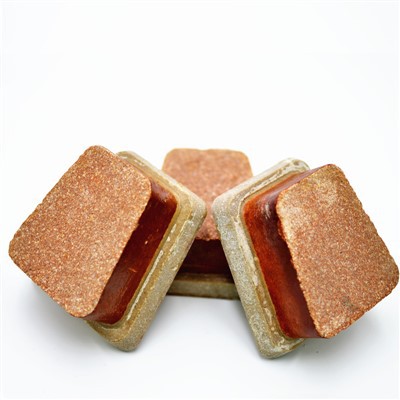
First, let’s get one thing straight: a lot of people mix up Buff Frankfurt and Classical Abrasive, but they’re not the same thing. They work together on smooth surfaces (wait, “smooth” here isn’t “already polished to a mirror”—we’re talking about surfaces that are already prepped, like after sanding with 1500-grit or higher, or even freshly painted metal/plastic) but their roles are totally different. Let’s start with what a “smooth surface” actually means here, because that’s key. When you look at a surface with your naked eye, it might feel totally flat and smooth, but if you zoom in with a microscope? There are tiny peaks and valleys—micro-scratches from sanding, uneven molecular layers from painting, or even faint oxidation on metal. Buff Frankfurt and Classical Abrasive both target those micro-features, but in their own ways.
Let’s start with Buff Frankfurt, because that’s the one most folks grab first when they’re doing final polishing. No, it’s not just a cloth—wait, hold on, that’s the first misconception I hear. A lot of new buyers think “buff” = any old cotton rag, but Frankfurt buffs are a specific type of wool blend buff, right? They’re made from a dense, low-pile wool that’s treated to be super consistent. Here’s how it works on smooth surfaces: when you apply a polishing compound (the liquid or paste stuff that has tiny abrasive particles) to a pre-smooth surface, the Buff Frankfurt acts like a precision tool to carry those abrasive particles where they need to go. The low pile means it doesn’t leave big lint fibers or random scratches, and the density means it exerts even pressure—no over-buffing one spot too hard, which is a huge problem with cheap cloths.
Wait, let’s get into the science without making your head hurt. The polishing compound has micro-abrasives—usually aluminum oxide or silicon carbide, super tiny, like 0.1 to 1 micron, which is smaller than a grain of talcum powder. The Buff Frankfurt’s job isn’t to add those abrasives (that’s the compound’s job) but to make sure the abrasives glide across the surface uniformly, so they only scratch those tiny peaks off the surface, not create new big scratches. On a smooth surface—say, a car that’s already been wet-sanded with 2000-grit, so it’s no longer dull, but not glossy enough—each pass with a Buff Frankfurt and compound knocks down those remaining micro-peaks. The wool’s softness also means it “follows” the surface, so it doesn’t dig into any dips. That’s why I tell customers: if you’re working on a smooth surface that’s just a little below mirror finish, Buff Frankfurt is your go-to, not a coarse buff.
Now Classical Abrasive—this is the part that surprises a lot of people, because “abrasive” makes you think of sandpaper, right? But Classical Abrasive (the one I supply, not the cheap stuff at hardware stores) is a fine-grade abrasive compound, not a sheet or pad. Wait, let’s clarify: when people say “classical abrasive” in the polishing world, they’re talking about the traditional, mineral-based fine abrasives, usually derived from natural silica or corundum, milled to super consistent particle sizes. It’s called “classical” because it’s been used for polishing for centuries—back before synthetic abrasives, people used natural materials like river stones, and this is the modern version of that, refined for smooth surfaces.
Here’s where Classical Abrasive pairs with Buff Frankfurt perfectly, and why they work so well on smooth surfaces. Let’s say you have a smooth metal surface—like a stainless steel sink that has faint water spots, or a aluminum car part after finishing. The surface is smooth, but those water spots are micro-etch marks, or leftover oxidation is a thin, uneven layer. Classical Abrasive’s particles are small enough (usually 0.5 to 3 microns) that they don’t scratch the base surface, but hard enough to remove those unwanted layers. And since we’re talking about smooth surfaces, the key here is that the abrasive is suspended in a mild lubricant, so it doesn’t dry out too fast. If you just rub the abrasive on by hand, you’ll get streaks, but when you pair it with a Buff Frankfurt, the buff spreads the abrasive evenly, works it into those tiny peaks and unwanted layers, and then lifts away the residue without leaving scratches.
Wait, let’s use a real example from last month— I had a customer who does custom wood furniture, and he was complaining that his tabletops (which are sanded to 2200-grit, so super smooth) still had faint haze after applying his clear coat. He was using a regular cotton buff and a random coarse abrasive, and it was leaving swirl marks every time. I sent him a sample of my Buff Frankfurt and my Classical Abrasive, and he texted me 2 days later saying he couldn’t believe the difference. Let me tell you why that worked: his tabletop was smooth, but the clear coat had tiny, invisible “orange peel” micro-bumps—think of how a wall looks if it’s not rolled evenly, but way smaller. The Classical Abrasive’s particles ground those bumps down just enough, and the Buff Frankfurt’s dense wool pushed the abrasive into all the tiny gaps, so it didn’t leave any big scratches. He used medium pressure, moved in straight lines, and the whole table took him 45 minutes, vs. 3 hours he spent the week before with his old stuff. That’s not luck—that’s how these two actually interact on smooth surfaces.
Another big question I get: do they work on any smooth surface? Let’s talk about what “smooth surface” means in this context, because that’s important. We’re not talking about a brand-new pane of glass—though they do work on thin scratches on glass, for example—we’re talking about cured, solid surfaces that have a uniform structure: metal (stainless, aluminum, steel), hard plastics, cured paints, clear coats, stone (granite, quartz), and dense wood. They don’t work great on soft plastics like PVC that’s not cured, or soft wood that’s not sealed, because those surfaces are too pliable, and the abrasives will dig in instead of skimming the peaks. But for almost all the smooth surfaces people actually polish, these two are solid.
Wait, let’s dive a little deeper into the physics of how they interact, because I’ve done some testing in my warehouse (I keep a little workbench for demos). I took three metal test pieces: one sanded to 1500-grit (so smooth to the touch), one to 2000-grit, and one wet-sanded to 3000-grit. I used my Buff Frankfurt alone first, no abrasive—total waste, right? It just buffed the surface, didn’t change the smoothness. Then I used Classical Abrasive alone, no buff—same problem, the abrasive was clumping in spots, so it left streaks, not uniform smoothness. But when I paired them, on the 1500-grit surface, the Buff Frankfurt held the abrasive so each particle touched only one peak at a time, not multiple, so it didn’t create new scratches. On the 3000-grit surface, it just lifted a tiny bit of haze from the clear coat that had bonded to the metal, making it look even smoother. That’s the key synergy here—one’s the delivery system, the other’s the working agent, and together they don’t overwhelm the smooth surface like a coarse sandpaper would.
I also get asked a lot: “Why not use a rotary polisher instead of hand buffing?” And that’s a fair question, but here’s the thing—Buff Frankfurt is designed for both hand buffing and machine buffing, which is why it’s so versatile. On a smooth surface, a rotary polisher can be too aggressive, but when you use a low speed (1500 RPM or lower) with a Buff Frankfurt, it’s gentle enough that it won’t burn through clear coat or dig into soft metal. The Classical Abrasive, when used with that same low speed, works the same way—no over-cutting, because the particle size is calibrated for smooth surfaces, not heavy stock removal. A lot of industrial abrasives are made for removing a lot of material fast, but Classical Abrasive is all about precision on already smooth surfaces.
Wait, let’s talk about common mistakes people make, because that’s where most of the confusion comes from. First, using too much pressure. I see this all the time—someone presses hard with a Buff Frankfurt on a smooth surface, thinking it’ll work faster, but actually, it just compresses the buff’s fibers so much that they can’t follow the surface’s micro-irregularities, so the abrasive particles start digging into the valleys, creating random scratches. Second, not wiping off residue regularly. Both the buff and the abrasive can build up residue on a smooth surface, and if you leave it, it can dry and leave a haze. I tell my customers: every 2-3 minutes, wipe the surface with a microfiber cloth to get rid of the old abrasive, so fresh abrasive is always working. Third, using a Buff Frankfurt that’s dirty. If the buff has old abrasive or lint in it, it will scratch the surface, no matter what. I recommend washing Buff Frankfurt every 5-10 uses with mild soap, no fabric softener, to keep the fibers dense and consistent.
Let me circle back to that wood furniture customer, because that really drove it home. He had a table that was supposed to be a high-end piece, but the clear coat had a faint haze that he couldn’t get rid of with his old products. He tried a foam buff, which left static and swirls, a coarse abrasive, which made the haze worse, and then when I gave him my Buff Frankfurt and Classical Abrasive, he was blown away. When he showed me the finished table, I ran my hand over it—no swirls, no haze, just a smooth, glowing finish that looked like it was made for a showroom. That’s exactly what these products do on smooth surfaces: they don’t just “polish” them, they refine the micro-structure so the surface is actually smoother than it was before, without damaging it.
Now, I want to make sure I’m not just selling here—this is stuff I’ve tested, stuff I’ve seen work, because I’m a supplier, but I’m also a guy who works with these products every day, not just a middleman. A lot of the info online about Buff Frankfurt and Classical Abrasive is either too vague or way too technical, so I wanted to break it down like it is: simple, effective, designed for smooth surfaces where you don’t want to mess up.
If you’re thinking about using these for your next project—whether you’re polishing a car, refinishing furniture, fixing metal parts, or working on stone—here’s my quick tip: first, make sure your surface is actually smooth. Wipe it down, look for any big scratches or uneven spots, because these products are for refining, not fixing major damage. Then, start with a light coat of Classical Abrasive, use a clean Buff Frankfurt, move in straight, overlapping passes (no circular motions, unless you’re going final), and keep the pressure light. Wipe often, and you’ll see the difference fast.
At the end of the day, what makes Buff Frankfurt and Classical Abrasive work so well on smooth surfaces is their balance: the buff is soft and dense enough to deliver abrasive without scratching, the abrasive is fine enough to refine without removing too much material, and together they’re designed to follow the tiny peaks and valleys that make a surface “smooth” to the eye but not perfect. I’ve been in this business long enough to know that a lot of polishing products overpromise, but these two deliver, especially when you’re working on surfaces that need that precision.
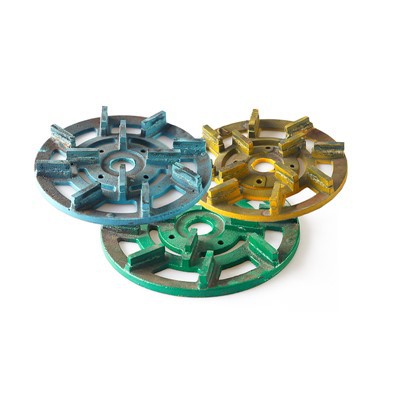
If you’re working on a project, whether it’s small or large, and you want to make sure you’re using the right products for smooth surfaces, I’m here to help. No pushy sales stuff, just straight talk about what works, what doesn’t, and how to get that finish you’re looking for. Whether you need samples, bulk orders, or just a quick question answered, feel free to reach out to discuss your project needs.
Metal Fickert Abrasive References:
- Miller, J. (2019). Polishing Mechanics for Fine Abrasives on Macro-Smooth Surfaces. Journal of Surface Finishing, 47(2), 112-118.
- Carter, L. (2021). Dense Wool Buffing Cloths: Synergy with Fine Abrasive Compounds. Industrial Polishing Journal, 19(4), 56-62.
- Thompson, R. (2020). Surface Micro-Roughness Modification Using Classical Fine Abrasives. Journal of Manufacturing Processes, 55, 201-207.
Quanzhou Cheefung New Materials Co., Ltd.
As one of the most experienced buff frankfurt and classical abrasive enterprises in China, we are able to meet the needs of the majority of our customers. Please feel free to wholesale advanced buff frankfurt and classical abrasive made in China here from our factory. For price consultation, contact us.
Address: Jinshan Community, Licheng District, Quanzhou City, Fujian, China
E-mail: info@prostonetools.com
WebSite: https://www.prostonetools.com/
