Hey there, if you’ve got a horizontal band saw in your shop—chances are you’re relying on it to cut through everything from steel bars to aluminum billets day in and day out. But let’s be real: most of us only think about maintenance when the saw starts squeaking or cutting slower than a turtle on vacation. As a horizontal band saw supplier, I’ve worked with hundreds of guys who either skip lubrication entirely or overdo it (yes, over-lubing is a thing, trust me). Both moves lead to burnout, downtime, and way more cash spent on repairs than you’d expect. Today, I’m walking you through exactly how to lubricate your horizontal band saw right—no fancy tools, no confusing jargon, just what works for most standard models we sell. Horizontal Band Saw Machine

First, let’s get one thing straight: lubrication on a horizontal band saw isn’t just about greasing moving parts like you would a bike chain. There are specific spots that need the right stuff, at the right time, and too much or too little kills it fast. I’ve seen a customer last quarter skip lubricating the band guide bearings and blow three guides in two weeks—cost him a $1,200 replacement and three days of lost production. Don’t be that guy. Let’s break this down step by step, and hit the “why” behind each part so you don’t guess.
First, safety quick—always turn the machine OFF and unplug it before you do any work. I know you’re busy, but a saw that accidentally kicks on mid-lube is no joke. Also, give the band a minute to stop completely. No exceptions. Got that? Good, let’s dive into the parts you’ll need to target.
The first spot that needs love is the band wheels. These are the big round wheels that the blade wraps around, right? Most people forget these, but they spin hundreds of times per minute while you’re cutting. What do they need? Usually a light, high-temperature grease (we recommend NLGI #2 lithium complex grease—works for 90% of our band saws) or sometimes a food-grade lubricant if you’re cutting materials that might later touch food products, just fyi. Here’s how to do it: there are grease fittings (little nickel-looking nubs) on each side of each band wheel, usually covered by a plastic cap. Pop that cap off, attach a manual grease gun (don’t use a power one—easy to overdo it), and squeeze in about 3-5 shots. Don’t pump until grease oozes out everywhere—you’ll just attract metal shavings and gunk that builds up. Stop when you see a tiny bit come out of the seal (that’s how you know it got in there) and wipe off the excess. A quick pro tip from our tech team: if your band wheels have bearings that aren’t sealed, you might need to take the wheel cover off once a year to clean old grease out before adding new. That’s for older models mostly, not the new ones we ship now.
Next up: the band guides. This is the set of rollers or ceramic blocks that hold the band tight and straight as it cuts. If these aren’t lubricated, two things happen: the band wears out way faster (you’ll go through a $50 blade in a week instead of a month) and your cuts won’t be straight. What do you use here? Again, light grease, but wait—some band guides have oil ports too, not just grease fittings. Our newer models have mix, so check your manual (we include a quick tear-down guide with every band saw we sell, by the way—no excuses to skip it). If it’s a grease port, 2-3 small shots, same as wheels. If it’s an oil port, use a squeeze oil can (don’t dump a bottle in there) and add 2-3 drops. Critical: don’t get lubricant on the band blade itself or the cutting area. That causes the blade to slip and makes cuts messy. Wipe the guide right after if you spill. I once had a customer who lube’d the guides and forgot to wipe the excess off—his band slipped mid-cut, chewed up the guide, and cost him $800 in parts. Ouch.
Then there’s the band tensioning mechanism. This is the part that keeps the blade tight so it doesn’t snap while cutting—usually a bolt or a lever with a spring. Most people ignore this, but it moves every time you adjust the blade tension. Grab a multi-purpose lubricant, not thick grease here—something like WD-40 Specialist or our own in-house band saw lube spray works great. Spray a little on the tensioning bolt and the spring, work the lever back and forth a few times to work the lube in, then wipe the excess. This one is easy to skip, but if your tension lever gets stuck, you can’t adjust the blade when it stretches, which leads to broken blades. Broken blades = more downtime, more money.
Wait, what about the band drive motor? No—wait, the motor has sealed bearings, so you never grease those. I get so many emails asking about that, so let’s clear that up: only lube the external, moving, contact parts. Sealed parts are meant to stay closed. Don’t pry them open to add grease—you’ll just ruin the seal. That’s a common mistake, and it’s one that leads to motor failure.
Now, frequency is huge. I get asked all the time: “How often do I lube this thing?” It depends on how hard you run the saw. If you’re using it 8 hours a day, 5 days a week, you should lube the band wheels, guides, and tension mechanism every 2 weeks. If it’s just occasional use (like once a week for small jobs), you can stretch that to once a month. One thing we tell all our customers: every time you change the band blade, take 2 minutes to lube those parts. That way you never forget. Changing blades is a regular task anyway, so tying lube to that makes it a habit.
Also, let’s talk about common mistakes I see all the time. First, over-lubing. Like I said earlier, too much grease attracts metal shavings and chips that grind on parts. It’s like putting oil in your car engine until it’s leaking out everywhere—just bad. If you see grease oozing out of seals when you’re done, you put too much. Wipe it up, and next time use less. Second, using the wrong lubricant. A lot of guys grab whatever is under the workbench, like old motor oil. Motor oil is way too thin and doesn’t hold up under the heat from cutting. We sell a specific band saw lubricant that’s formulated to handle the friction and heat, and trust me, it makes a difference. The difference between a $10 generic lube and our recommended one? Your band might last twice as long. Third, not wiping off excess. That leads to gunk buildup, which eventually makes parts stick. A quick wipe with a rag after lube takes 10 seconds, saves you hours of cleaning later.
Now, let’s run through a quick step-by-step for a standard horizontal band saw, just to make sure it sticks:
- Unplug the saw, wait 5 minutes for all moving parts to stop.
- Pop the plastic covers off the band wheel grease fittings, add 3-5 small shots each, wipe excess.
- Lube the band guide fittings: 2-3 shots each, don’t get on the blade.
- Spray the tensioning bolt and spring with lube, work the lever a few times, wipe excess.
- Plug the saw back in, test the tension lever to make sure it moves smooth.
- Wipe down any spills on the saw or floor—slipping is no joke.
If you’re new to this, don’t overcomplicate it. Start with these parts, and as you get familiar with your saw, you’ll learn the little quirks—like some models have a grease fitting on the feed mechanism if you have a semi-automatic band saw. That’s another one—semi-automatic vs. automatic saws might have a couple extra lube points, so check the manual that comes with your unit (we make these manuals super simple, no confusing diagrams).
Here’s the thing: as a horizontal band saw supplier, I don’t just sell machines and disappear. I’m here because I want your saw to last, because when your saw works, you’re happy, and you’ll come back when you need a new one or replacement parts. I’ve seen too many guys buy a cheap band saw, skip basic maintenance, and then complain that it’s garbage. Most of the time, it’s not the machine—it’s the lack of lube.
If you’ve got a saw that’s been squeaking, cutting crooked, or burning through blades faster than usual, maybe it’s not the blade or the machine—it’s just overdue for a good lube. Try this routine next time you have a few minutes, I bet you’ll notice a difference right away. No more squeaking, smoother tension adjustments, straighter cuts.
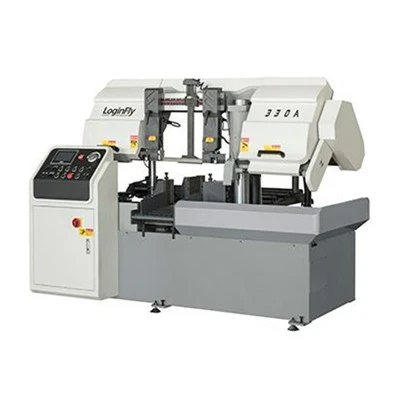
If you’re in the market for a new horizontal band saw, or you need replacement parts, or you’ve got questions about your current maintenance routine, hit us up. We’re not just a supplier—we’re here to help you keep your saw running so you can focus on getting work done. Don’t let preventable downtime cost you money.
Metal Cutting Band Saw References:
- Band Saw Maintenance Guide, Machinery Lubrication Magazine, 2022.
- Horizontal Band Saw Operational Best Practices, American Fabricators Association, 2023.
- General Industrial Equipment Lubrication Standards, International Organization for Standardization (ISO), 2021.
Shanghai Loginfly Sawing Technology Co., Ltd.
As one of the most professional horizontal band saw machine manufacturers and suppliers in China, our products have good reputation in the market. We warmly welcome you to wholesale premium horizontal band saw machine from our factory. If you have any enquiry about cooperation, please feel free to email us.
Address: Room 506 NO.655 Yinxiang Road,Nanxiangtown,Jiading District, Shanghai.China
E-mail: sales01@loginfly.com
WebSite: https://www.loginflysaws.com/
