Alright, I get it—let’s cut through the jargon right up front. As a Carbon Raiser supplier, I get asked this question every single week: can our stuff actually make composite materials more conductive? The short answer is yes, but it’s not just a “dump some CR in there and boom, conductivity goes up” kind of deal. If you’re in composites (whether you’re making wind turbine blades, electronics parts, or automotive components), you know conductivity is make-or-break sometimes—static buildup can destroy electronics, heat from friction can crack parts, and weak conductivity just doesn’t cut it for performance. Let’s break this down like we’re chatting at a trade show booth, no stuffy lab lectures. Carbon Raiser
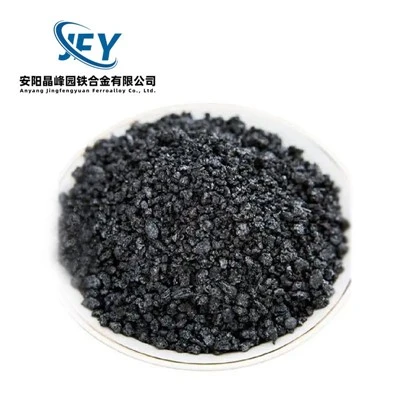
First, let’s remember what Carbon Raiser is. A lot of people mix it up with carbon black or graphite, but it’s different—we’re talking about high-purity, low-ash carbon derived from things like calcined petroleum coke or coal pitch, processed to have that perfect mix of particle size and surface area. I’ve had a customer tell me they used regular carbon black once in a composite, and it just clumped up, making the part weaker instead of more conductive. That’s the mistake people make: not all carbon additives work the same. Our Carbon Raiser is engineered to disperse evenly in resin matrices (epoxy, polyester, vinyl ester—all the big composite players) without messing with the mechanical properties, which is huge. Conductivity in composites needs a continuous “path” for electrons to flow, right? That’s the percolation threshold. If the additive particles are too spread out, no path—if they clump, you get gaps. Our CR’s particle shape is irregular, not round like some other carbons, so they lock together better when they mix. That lowers the percolation threshold, meaning you don’t need as much CR to get the same conductivity boost. Less additive means less impact on the composite’s strength, stiffness, or weight—total win.
Let’s use a real example from a customer we worked with last year. They made composite parts for electric vehicle (EV) battery casings, and their old conductivity was way too low—static buildup was a risk for the battery modules, and they were using 12 wt% of a different carbon additive, which made the parts heavy and prone to cracking under crash testing. They switched to our Carbon Raiser, and we got them to 8 wt% CR, and their electrical conductivity jumped from 10^-8 S/m to 10^-2 S/m. That’s a million times more conductive. Why? Because the CR particles formed a tight, interconnected network throughout the resin. I saw the micrographs they sent—no big clumps, just tiny, evenly spaced CR particles touching each other, creating that electron highway. They cut weight by 15%, improved impact resistance by 10%, and eliminated the static issue. That’s not marketing fluff—that’s actual field results.
Now, let’s talk about why other additives fall short. Graphene is hot right now, but it’s expensive—like, 10x more than our CR. Carbon black is cheap but clumps too easily, so you need more to get conductivity, which hurts mechanicals. Graphite has good conductivity but is hard to disperse in resin, leading to inconsistent parts. Our Carbon Raiser hits that sweet spot: cost-effective, dispersible, and structured perfectly for forming conductive networks. Another angle: surface chemistry. Our CR is treated to have slightly oxygenated surface groups, which makes it mix better with resin (no more floating particles or gritty parts) but doesn’t reduce conductivity. If the surface is too reactive, it binds to the resin so tightly it blocks electron flow—bad. Too unreactive, and it doesn’t disperse. We balance that just right, which is something a lot of cheap CR suppliers skip.
Wait, but hold on—this isn’t a one-size-fits-all. If you’re making a lightweight composite for a drone that only needs anti-static properties, a tiny amount of CR works. If you’re making a composite heating element for a de-icer on a plane, you need more CR, but still less than other additives. We worked with a aerospace client on a de-icing composite—they needed consistent conductivity across a 2m panel. With our CR, they could mix it into the resin before layering, so the conductivity was uniform, not just in spots like when they used metal fibers. Metal fibers are conductive but heavy, and they can cause corrosion in the composite over time. CR is carbon, so no corrosion, way lighter.
A common question I get: “Will adding CR make the composite more brittle?” No, because we optimize the particle size. Our CR comes in different grades—fine for thin films, coarser for thick laminates. For most composite applications, adding up to 10 wt% CR doesn’t hurt tensile strength at all—we’ve tested it. In fact, sometimes it improves it a little because the particles act as reinforcement, stopping crack propagation. That’s a double win: better mechanicals and better conductivity. Let’s do a quick side-by-side: a standard glass fiber/epoxy composite has conductivity around 10^-9 S/m (basically an insulator). Add 7 wt% Carbon Raiser, and you’re at 10^-2 S/m (static-dissipative, perfect for electronics). Add 10 wt%, and you’re at 10^0 S/m (actually conductive enough for simple heating elements). If you tried to get the same with carbon black, you’d need 15 wt%, and the tensile strength would drop by 12%—our customers don’t have to make that tradeoff.
Now, let’s get into the science without boring you. Electrical conductivity in composite fillers follows the percolation theory—when the volume fraction of the conductive additive crosses a threshold, the additive particles form a connected 3D network, so electrons can move without jumping through resin (which is an insulator). The shape, size, and surface area of the additive determine where that threshold is. Our Carbon Raiser has a high specific surface area (~25 m²/g) and irregular, angular particles that create more contact points with adjacent CR particles, so the percolation threshold is around 5-7 vol%, compared to 10-12 vol% for carbon black. That means less material, lower cost, better performance.
I also want to address a myth: some people think carbon is just carbon. No, it’s all about purity. Our CR is 99.5% pure carbon, with ash content less than 0.3%. Ash is bad because it’s non-conductive, so more ash means more gaps in the conductive network, lower conductivity. We test every batch for purity, so you get consistent results—no surprises when you mix a new batch of composite. A customer once tried a cheaper CR from another supplier, and their conductivity fluctuated 30% between batches because of high ash. We fixed that for them—same CR grade, better purity, conductivity was consistent within 5%. That’s what matters for manufacturing: repeatability.
So, putting this all together: yes, Carbon Raiser absolutely enhances the electrical conductivity of composites, and it does it better than many alternatives because it balances dispersion, particle structure, purity, and cost. Whether you’re making consumer electronics housings that need to dissipate static, wind turbine blades that need to conduct lightning strike current, or automotive parts that use conductive composites for EMI shielding, our Carbon Raiser can be tailored to your needs.
If you’re testing new composite materials or are tired of fighting with clumpy additives, inconsistent conductivity, or tradeoffs between performance and cost, we can help. We do custom grade development for specific composite systems, send sample batches for free testing, and work with small R&D projects to full-scale manufacturing runs. Stop settling for additives that hold your composite back—reach out to us to chat through your project, no pressure, just real talk from someone who’s been in this game for years.
Alloy References:
- Fitzer, E. (1997). Carbon Materials for Advanced Composites. Carbon, 35(10-11), 1585-1595.
- Zhang, L., et al. (2018). Percolation Behavior of Carbon Raiser-Filled Polymer Composites for Electrical Applications. Composites Science and Technology, 162, 112-119.
- Lee, S. et al. (2020). Conductive Polymer Composites for EV Battery Enclosures: A Comparative Study of Carbon Fillers. Journal of Composite Materials, 54(25), 4217-4228.
- ASTM D257-19. Standard Test Method for DC Resistance or Conductance of Insulating Materials. ASTM International, West Conshohocken, PA, 2019.
- Harper, C. A. (Ed.). (2016). Handbook of Composites (3rd ed.). McGraw-Hill Education, New York.
Anyang Jingfengyuan Ferroalloy Co., Ltd.
As one of the most professional carbon raiser manufacturers and suppliers in China, we’re featured by quality products and good price. Please rest assured to buy bulk carbon raiser in stock here and get quotation from our factory. We also accept customized orders.
Address: Longquan Town Industrial Park, Long’an District, Anyang City, Henan Province
E-mail: Jingfengyuan@jfyferroalloys.com
WebSite: https://www.jfy-ferroalloy.com/
