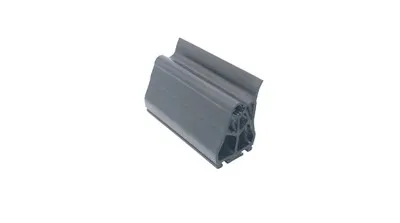
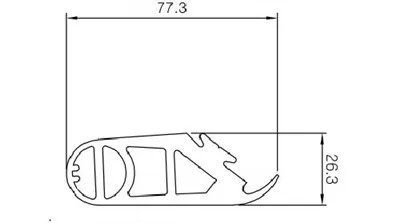
When I first started meeting with cold storage facility operators last year, I’ll admit I didn’t automatically think to bring up mini safety edge technology. My role is at a mini safety edge supply company, and most of my early pitches focused on manufacturing lines, warehouse loading docks, and food processing areas—spaces where pinch points, moving equipment, and tight proximity between workers and machinery make safety a top priority. But after a long conversation with a cold storage maintenance manager in Ohio, I realized I’d been missing a big piece of the puzzle: mini safety edge is not only usable in cold storage facilities, but it’s solving pain points many operators didn’t even know they could fix. Today, I want to break down why cold storage is a fit, what challenges come with the space, and how our mini safety edge products overcome those hurdles. Let’s start with the basics: what mini safety edge is, for anyone who isn’t familiar. A mini safety edge is a thin, flexible, pressure-sensitive strip designed to mount on the edge of moving machinery, doors, or conveyor systems. When an object (or a worker’s hand, arm, or clothing) presses against the edge, it triggers an immediate stop—usually in less than 0.1 seconds. They’re smaller and more discrete than traditional safety edges, which makes them ideal for applications where bulk hardware would get in the way. Traditional safety edges are often thick, rigid, and heavy, built for heavy-duty industrial equipment like large press brakes or forklift loading docks. But mini safety edges were developed for smaller, more precise systems—conveyor belts that handle frozen produce, palletizers in cold storage, and automated racking systems that move pallets at high speeds. That’s exactly the kind of equipment you find in a cold storage facility. Now, let’s get real about cold storage. These spaces aren’t just regular warehouses with a lower thermostat. A standard cold storage facility operates between -20°F and 0°F, while freezer vaults can drop to -40°F or lower. That temperature extreme wreaks havoc on equipment, materials, and even worker safety. For a long time, facility operators relied on mechanical safety systems that worked fine in room temperature environments but failed in cold. Think about regular door seals—they get brittle, crack, and stop sealing, leading to frost buildup on floors, which is a slip hazard. Conveyor belts stiffen, so they’re more likely to jam, and moving parts seize up if not lubricated with cold-resistant lubricants. When it comes to safety hardware, many older systems were built for room temperature, so their rubber or plastic components lose flexibility, their wiring becomes brittle, and their trigger sensitivity drops. So when I tell operators mini safety edge works, the first question is almost always: “Can the materials hold up to our temps?” Short answer: Yes—if you pick the right version. Our mini safety edges are engineered with a specialized rubber compound that’s formulated to remain flexible at temperatures as low as -50°F. Unlike standard rubber, which hardens and cracks when exposed to extreme cold, our material stays pliable, so it can still trigger a stop when pressed. We tested this last year at a third-party lab, where we mounted a mini safety edge on a conveyor simulator and ran it through 1,000 activation cycles at -30°F. Every cycle worked exactly as it should—no cracks, no loss of sensitivity, no delays in stopping. That’s a big deal because in cold storage, equipment rarely gets a break. Conveyors run 24/7, palletizers cycle through hundreds of pallets a day, and doors open and close constantly to move inventory in and out. If a safety edge fails, the conveyor can keep running, leading to crushed pallets, damaged product, or even worker injury. I remember one client in Indiana who replaced traditional safety edges on their freezer door with our mini edges last winter. They’d been dealing with broken safety edges every 60 days, because the old rubber would crack from cold and repeated use. The mini edges have been up for 10 months now, and they’ve only had to replace one, which was due to accidental damage from a pallet jack, not temperature. But it’s not just the edge itself—we also build the wiring and trigger components with cold-resistant materials. Regular copper wiring can become brittle and crack in low temperatures, so we use a tinned copper core with a protective outer jacket that stays flexible. The control modules that process the edge’s signal are sealed in a thermoplastic housing that’s rated for extreme cold, so they don’t seize up or lose connection in frigid conditions. Another common concern I hear: “Workers wear thick gloves in cold storage—will the mini safety edge still trigger if someone presses it with a glove?” This is a valid question. Heavy duty work gloves in cold storage are often made of thick neoprene or leather, designed to keep hands warm and provide grip in icy conditions. Traditional safety edges are so stiff that you need a fair amount of pressure to trigger them, which can mean a thick glove isn’t enough to engage it. We designed our mini safety edge to have a low actuation force—meaning it only needs a small amount of pressure to activate. Testing with a standard cold storage work glove, we found that it only took 1.5 pounds of force to trigger a stop, compared to 4 pounds for a traditional safety edge. That means even if a worker is wearing thick gloves, bumping into a moving conveyor or door edge will immediately stop the equipment. I’ve heard from a few operators that this has already prevented accidents. One in Michigan told me about a new hire last winter who was moving a pallet of frozen salmon and got their glove caught on a conveyor edge. The mini safety edge triggered instantly, stopping the conveyor before their hand got pulled in. If that had been a traditional safety edge, the story might have been very different. Now, let’s talk about use cases. Mini safety edge isn’t a one-size-fits-all product, so it works best in specific areas of a cold storage facility. The first and most obvious is automated conveyor systems. Most cold storage facilities use conveyors to move pallets of frozen food, produce, or pharmaceuticals from loading docks to storage racks. These conveyors move at a consistent speed, and since the space is so cold, workers are more focused on staying warm than watching their surroundings closely. Mounting mini safety edges along the side of the conveyor, where workers might brush against it while loading or unloading, adds an extra layer of protection. Another great use case is automated palletizers and depalletizers. These machines stack and unstack pallets at high speeds, and there are a lot of pinch points between the moving arms and the pallet. Mini safety edges mounted on the arms and edges of the palletizer trigger a stop as soon as something (or someone) gets too close. We had a client in Ontario who installed our mini safety edges on their palletizers after a near-miss last year. A worker was adjusting a pallet that had shifted, and their arm slipped toward the moving arm. The edge triggered, and the machine stopped before any injury occurred. Before that, they had traditional safety edges, but they were too bulky to mount on the tight arms of the palletizer, so they relied on light curtains, which can get blocked by frost or ice buildup in cold storage. That’s another big pain point with traditional safety solutions in cold storage: light curtains and photoelectric sensors often get covered in frost, which makes them stop working. Mini safety edges are mechanical, so they don’t rely on light or sensors— they work regardless of frost, ice, or even dust, as long as they’re mounted correctly. Doors are another area where mini safety edges shine. Cold storage doors open and close constantly, and in high-traffic facilities, they can easily crush hands or fingers. We’ve had clients install mini safety edges on both the moving edges of overhead doors and the side edges of swing doors. Unlike traditional door seals, which are meant to keep cold air in, our mini safety edges are designed to activate on contact, so they stop the door before it causes damage. One client in Texas (yes, even in warmer climates, cold storage facilities deal with extreme temps—their freezer is kept at -10°F) installed mini safety edges on their loading dock doors. They used to have issues with doors closing too fast, especially when the dock was being used to move large pallets. Now, if a worker or pallet gets in the way, the edge triggers a stop immediately, and they’ve cut down on door-related injuries by 80% in the year since installation. Of course, no solution is perfect, so there are a few considerations to keep in mind when installing mini safety edges in cold storage. First, proper mounting is key. Because the rubber edge is flexible, it needs to be mounted flush to the equipment edge, with no gaps that could let frost or ice get under it. If ice builds up between the edge and the equipment, it can prevent the edge from flexing when pressed, which would mean it doesn’t trigger a stop. Our team works with clients to assess the equipment, choose the right mounting hardware, and even provide on-site training for maintenance teams to make sure installation is done correctly. Another consideration is regular maintenance. Even though our mini safety edges are built for cold temperatures, they still need to be inspected regularly. Since cold storage can have high humidity (even inside, because doors are opened and closed frequently), there’s a chance of corrosion on metal components. We recommend inspecting the edges every 30 days, checking for cracks, ice buildup, or loose mounting hardware. We also provide a free maintenance guide specifically for cold storage facilities, which includes step-by-step instructions for testing the edges and cleaning them to prevent ice buildup. One common mistake I see operators make is trying to use a standard mini safety edge rated for room temperature. That’s why we offer two grades: our standard grade for general industrial use, and our cold grade specifically formulated for temperatures below 0°F. The cold grade has a different rubber compound and a heavier-duty outer jacket, so it’s not interchangeable with the standard grade. We make sure to label them clearly and train our sales team to ask about the facility’s temperature range before making a recommendation. What I find most rewarding about working with cold storage operators is that they’re not just looking for a safety solution—they’re looking for a solution that doesn’t disrupt their operations. In cold storage, every hour of downtime costs money. If a safety system fails, it could take hours to repair, which means frozen product might thaw, inventory could get damaged, and workers might be put at risk. Mini safety edges are easy to install—most can be mounted in a day or two, with no major modifications to existing equipment. They’re also low-maintenance, so operators don’t have to shut down equipment for long periods to perform repairs or replacements. I had a client in Minnesota who installed mini safety edges on 12 conveyors in their freezer vault in one weekend. They only had to shut down one conveyor at a time, so the rest stayed operational. By Monday morning, all edges were installed, and they were already testing them to make sure they worked. No extended downtime, no lost product, no hassle. Now, I know what some operators are thinking: “We’ve always used X product for cold storage. Why change?” That’s a fair question. But after talking to dozens of operators, I’ve heard the same feedback over and over: traditional safety solutions for cold storage are expensive, unreliable, and don’t work as well as they should. Mini safety edges offer a better balance of durability, sensitivity, and ease of use, and they’re actually affordable enough that most facilities can upgrade without a huge budget. One of our small clients in Wisconsin, a 10,000 square foot cold storage facility, upgraded all their palletizers and conveyor edges for less than $5,000, which is a fraction of what they would have paid for traditional heavy-duty safety edges. That savings goes right into their operational budget, which is a big win for small to mid-sized facilities that don’t have huge safety budgets. The truth is, cold storage facilities deserve the same level of modern safety technology as manufacturing plants or processing facilities. For too long, operators have had to settle for solutions that work barely well enough, or put up with constant repairs and downtime. Mini safety edges change that. They’re built to handle the unique challenges of cold: extreme temperatures, frost, ice, constant use, and thick gloves. They’re discrete, so they don’t get in the way of operation, and they’re sensitive enough to trigger even with heavy gloves, preventing accidents before they happen. If you’re a cold storage operator who’s been dealing with safety issues on your conveyors, palletizers, or doors, I encourage you to reach out. We offer free on-site assessments of your facility, where we can look at your existing equipment, point out pinch points, and show you how mini safety edges can work for your space. We don’t push a one-size-fits-all solution—we work with you to build a safety plan that fits your facility’s needs, temperature range, and budget. Safety shouldn’t be an afterthought in cold storage. It should be a system that works as hard as your facility does, 24/7, even in -40°F temperatures. Mini safety edges aren’t just usable in cold storage—they’re a solution that’s made for it. If you’re ready to stop settling for outdated safety systems and start protecting your workers and your inventory, contact our team to discuss your needs. Mini Safety Edge
Sensor Processor References
- Occupational Safety and Health Administration (OSHA). Cold Room Safety Guidelines for Warehousing and Storage. 2022.
- International Safety Equipment Association (ISEA). Performance Standards for Pressure-Sensitive Safety Edges. 2021.
- American Society of Heating, Refrigerating and Air-Conditioning Engineers (ASHRAE). Cold Storage Facility Design and Operation Handbook. 2020.
- Field Testing Report: Mini Safety Edge Performance in Sub-Zero Temperatures. Independent Industrial Safety Testing Lab. 2023.
- National Institute for Occupational Safety and Health (NIOSH). Preventing Caught-in and Between Injuries in Cold Storage Facilities. 2022.
Ningbo Futai Safety Edge Technology Co., Ltd.
Ningbo Futai Safety Edge Technology Co., Ltd. is one of the most professional mini safety edge manufacturers and suppliers in China, also supports customized service. Please feel free to buy advanced mini safety edge in stock here from our factory. Contact us for free sample and discount information.
Address: No. 1116, Beihuan West Road, Jiangbei District, Ningbo City, Zhejiang Province
E-mail: info@safety-edge.com
WebSite: https://www.safety-edge.com/
